THE ISLAND TOURSri Lanka Expeditions
Polonnaruwa 1
North Central Province

Polonnaruwa

Artistic maturity of Sri Lanka's medieval kingdom and lost jungle ruins.

North Central Province
Private Guided Route
Curated Boutique Stays
24/7 Island Concierge

Region

North Central Province

Best Time to Visit

May to September (Optimal for Cycling Tours)

Climate

Classic tropical dry-zone climate softened by breezes off the vast inland reservoir.

Coordinates

7.94°N, 81.02°E

Comprehensive Overview

Essential insights, history, and seasonal climate for Polonnaruwa

The Medieval Capital & Artistic Pinnacle of Stone Carving

Hidden beneath a lush canopy of green forests and sprawling marshlands in the North Central Province, Polonnaruwa stands as Sri Lanka's second ancient capital. Following the fall and destruction of Anuradhapura in the late 10th century AD, the island's rulers shifted the seat of power to Polonnaruwa, transforming it into a highly secure, beautifully planned medieval city. While Anuradhapura represents the dawn of Sinhalese civilization, Polonnaruwa showcases its artistic maturity, characterized by refined stone sculpture, grand multi-story palace architecture, and an exceptional fusion of Sinhalese Buddhist and South Indian Hindu design styles.

Parakrama Samudra (The Inland Sea) & Compact Ruins

The geography of Polonnaruwa is defined by its compact, beautifully preserved archaeological park. Unlike the sprawling layout of Anuradhapura, Polonnaruwa's ruins are tightly clustered within a centralized area, making it an ideal destination to explore by bicycle along shaded dirt paths. The landscape is anchored by the Parakrama Samudra, a colossal, man-made shallow reservoir so massive that it creates crashing waves like the ocean. The climate here is classically tropical and dry, with hot, sun-drenched days softened by cooling breezes sweeping off the lake.

Best Time to Visit & Climate Insight

May to September brings dry, sun-drenched days perfect for exploring the compact, shaded archaeological park on bicycles.

Lost Jungle Kingdom, Banyan Tree Roots & Revered Buddhas

Exploring Polonnaruwa feels like walking through a lost jungle kingdom. Families of toque macaque monkeys climb across the ancient brick walls, and massive banyan trees wrap their roots around historic stone entryways. The site remains a highly revered place of worship, where pilgrims offer flowers to massive Buddha images carved directly out of the living granite rock. The sensory experience of Polonnaruwa is deeply evocative: the sound of bicycle bells chiming along forest paths, the warm scent of sun-baked brick, and the unforgettable sight of perfectly carved stone Buddhas resting peacefully under the jungle shade.

Interactive Navigation

Regional Location Map

Open in Google Maps

Things to Do

Must-see cultural & natural highlights in Polonnaruwa

Polonnaruwa Vatadage
UNESCO Heritage

Polonnaruwa Vatadage

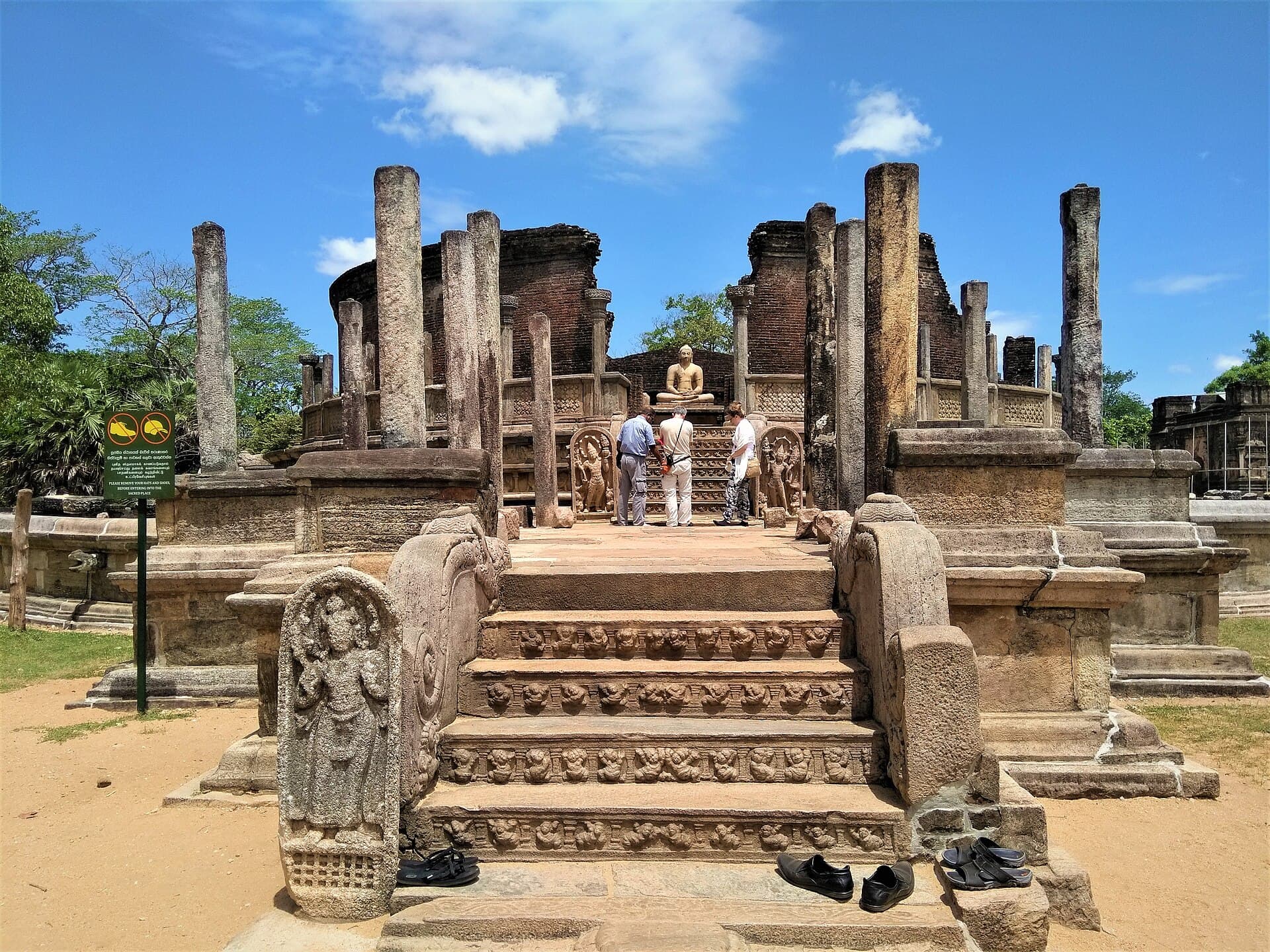
Situated within the sacred Dalada Maluva (Quadrangle) complex, the Polonnaruwa Vatadage is a circular relic house that stands as one of the most uniquely designed structures in Sri Lanka. Built to protect the sacred tooth relic before it was moved to Kandy, this architectural masterpiece features a circular design that showcases the incredible skill of medieval stone masons. The structure is built on a two-tiered circular stone platform, accessed by a stone staircase decorated with an intricately carved moonstone (Sandakada Pahana) and guardian stones (Muragala) at the base. The upper platform features a small central stupa surrounded by four beautifully seated stone Buddhas, each facing one of the four cardinal points. The outer wall of the Vatadage is adorned with delicate low-relief carvings of lions, dwarfs, and floral patterns, while a ring of elegant stone pillars once supported a wooden conical roof designed to shade the interior. Walking around the circular platform allows visitors to view the sculptures up close. The symmetry of the design, the preservation of the stone figures, and the peaceful jungle setting make the Vatadage the focal point of the Quadrangle complex.
View Experience Details
Rankot Vihara
UNESCO Heritage

Rankot Vihara

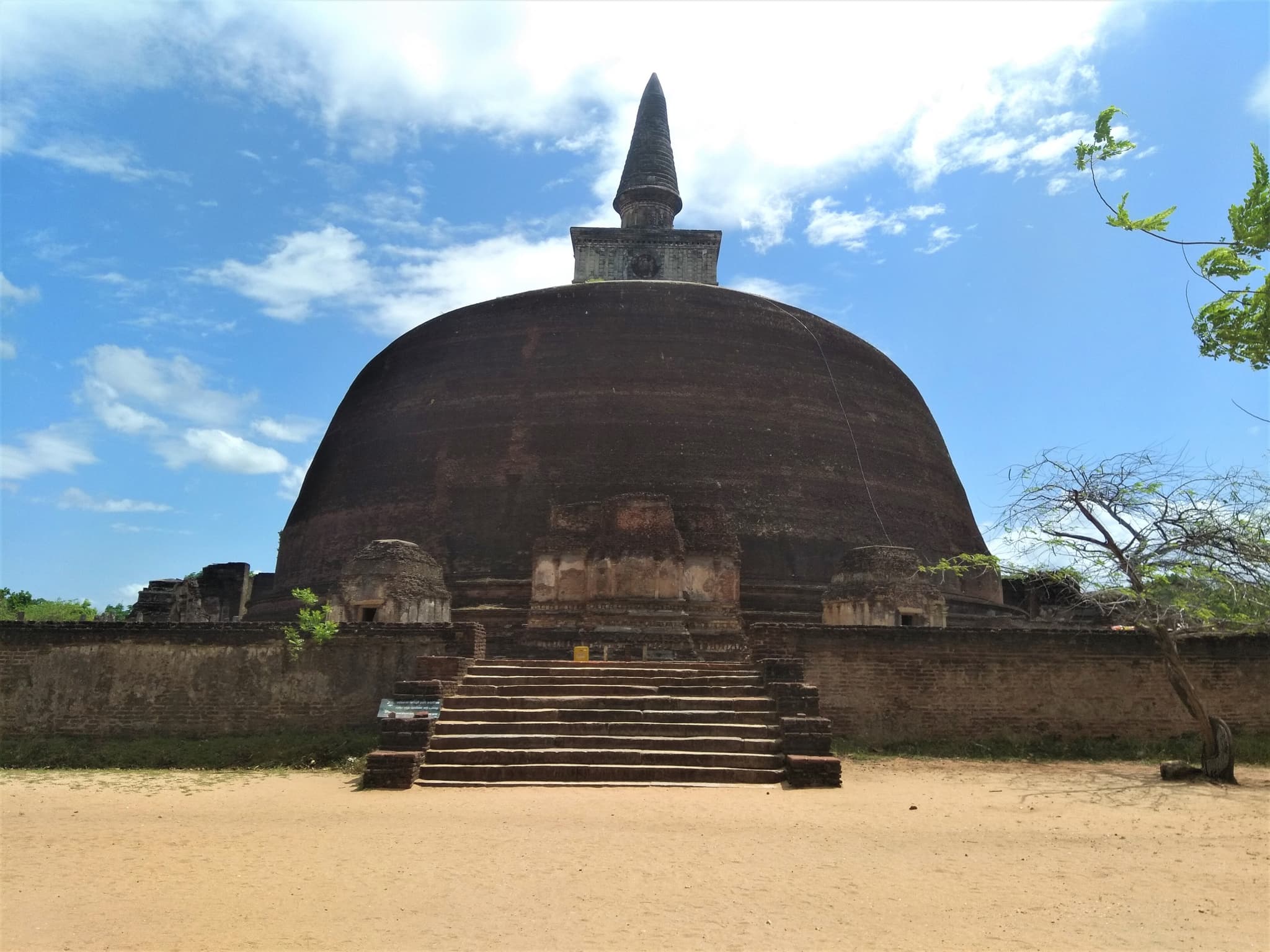
Rising like a massive mountain of red earth over the forest canopy, the Rankot Vihara is the largest complete stupa in Polonnaruwa and the fourth-largest on the island. Constructed in the 12th century by King Nissanka Malla, the name Rankot Vihara translates to "The Golden Pinnacle Stupa," a name derived from the gilded bronze spire that originally topped the monument. The stupa stands at a height of roughly 180 feet (55 meters) and features a massive brick dome built in the classic architectural style of the ancient Anuradhapura stupas, showcasing the king's desire to match the grand scale of the earlier kingdom. The monument is built on a wide, raised stone platform surrounded by a forest of tall trees. The base of the brick dome features a series of small, beautifully carved image houses (Vahalkada) where pilgrims can leave floral offerings. Unlike the whitewashed stupas found in other parts of the island, Rankot Vihara has been left in its natural brick state, giving it a raw appearance that contrasts beautifully with the blue sky. A broad sand pathway runs around the base, providing a popular walking loop for travelers exploring the archaeological park by bicycle.

View Experience Details
Parakrama Samudra
Culture & Temples

Parakrama Samudra

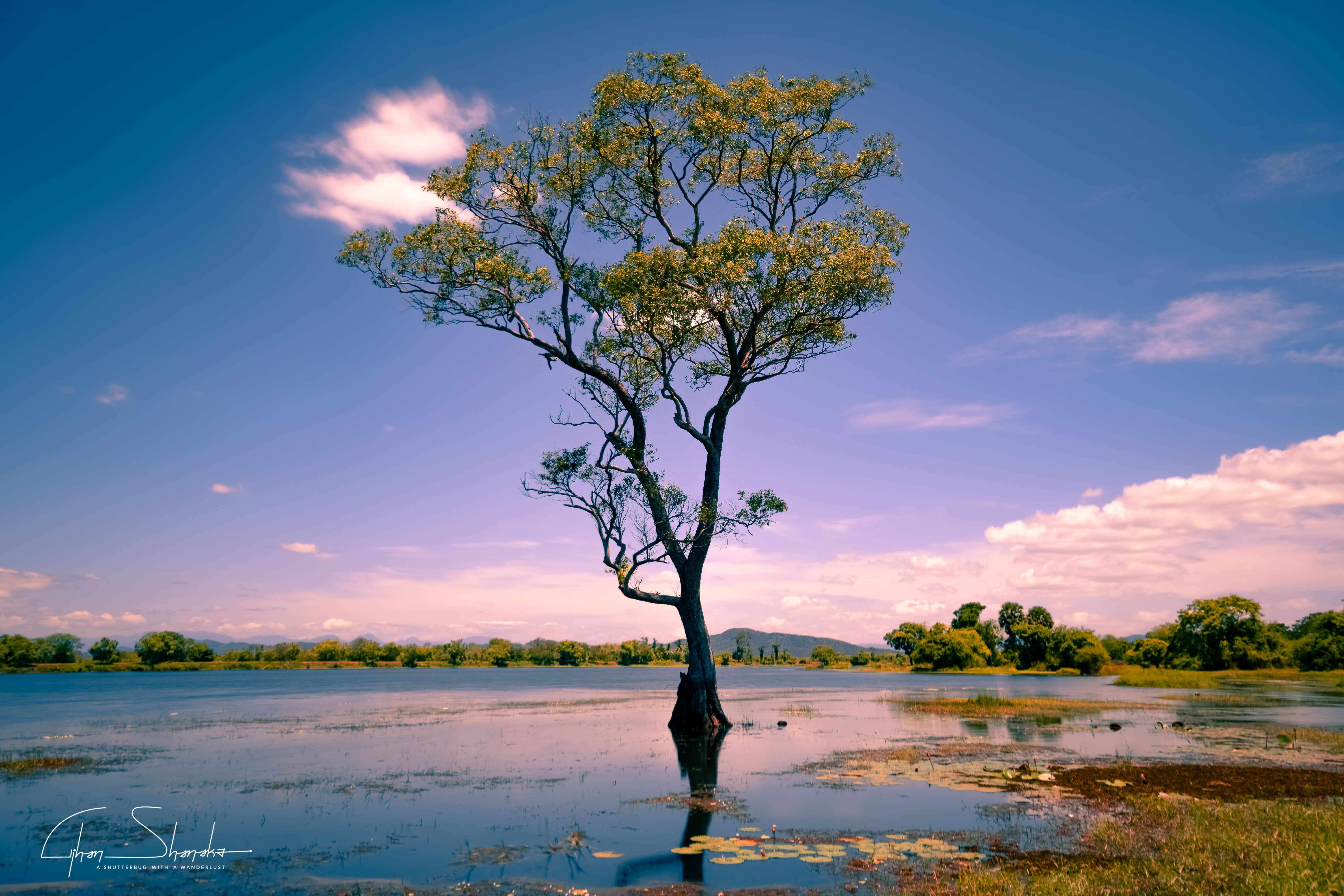
The Parakrama Samudra, known universally as the "Sea of Parakrama," is a colossal, man-made shallow reservoir that stands as the ultimate achievement of ancient Sri Lankan hydraulic engineering. Built by King Parakramabahu the Great in the 12th century, this massive body of water was created by connecting three older reservoirs via a system of embankments and channels, following the king’s famous decree that "not a single drop of water falling from the sky should flow into the ocean without serving the development of mankind." The reservoir spans a vast area of over 5,300 acres, so massive that its flowing waters produce active waves like the ocean, making it difficult to see the opposite shoreline on misty days. The reservoir is anchored by a massive earthen dam that stretches for miles along the edge of the city. Today, the Parakrama Samudra remains a vital life source for the region, channeling water to thousands of acres of surrounding rice paddies and providing a home to diverse wildlife, including large flocks of pelicans, cormorants, and water monitor lizards. A broad road runs along the top of the embankment wall, providing a popular scenic route for an evening stroll or bicycle ride. The sunset over the water is spectacular, as the sun sinks below the distant mountains, painting the lake in warm shades of gold and orange, offering a peaceful conclusion to an exploration of Polonnaruwa.

View Experience Details
Gal Vihara Rock Temple
UNESCO Heritage

Gal Vihara Rock Temple

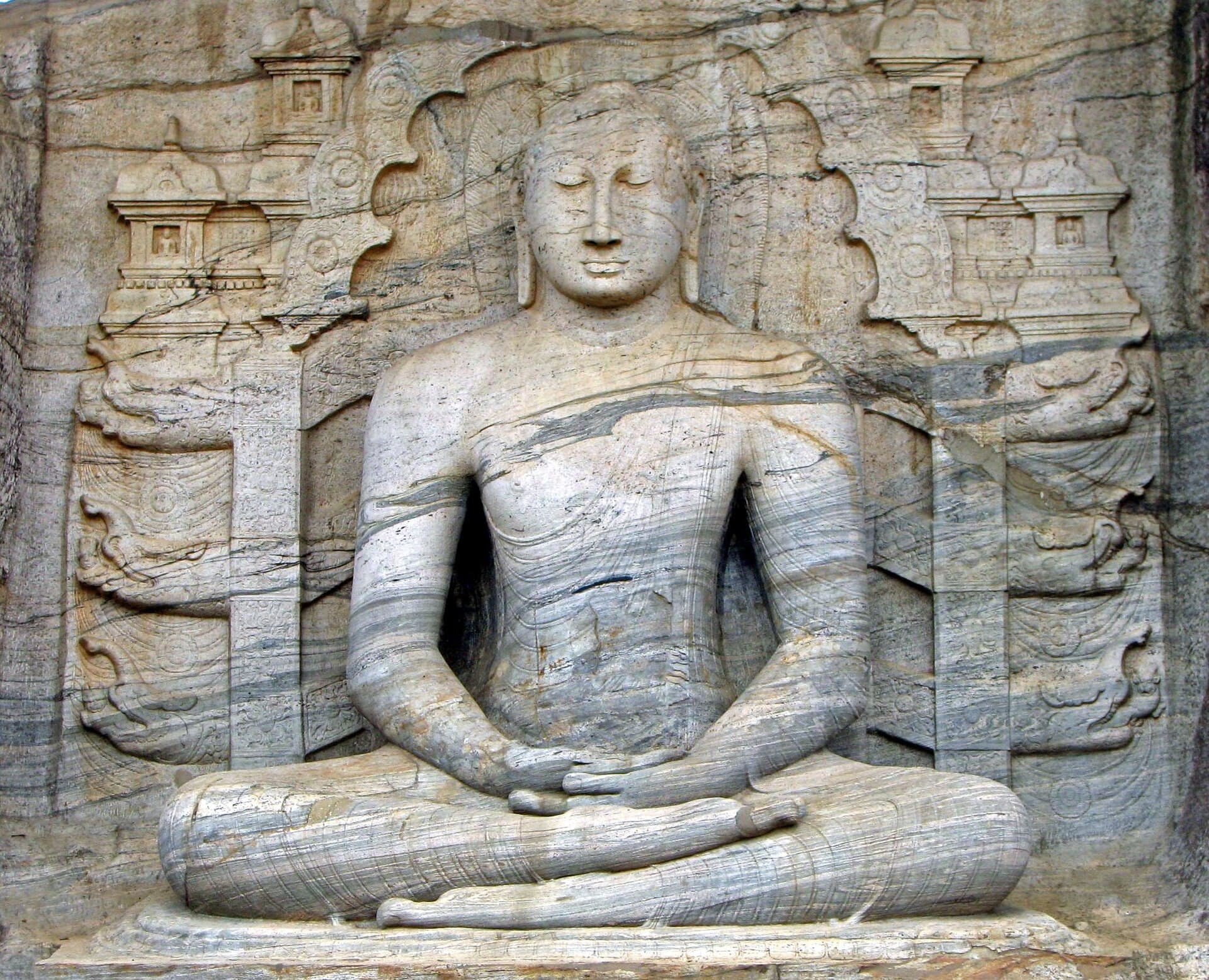
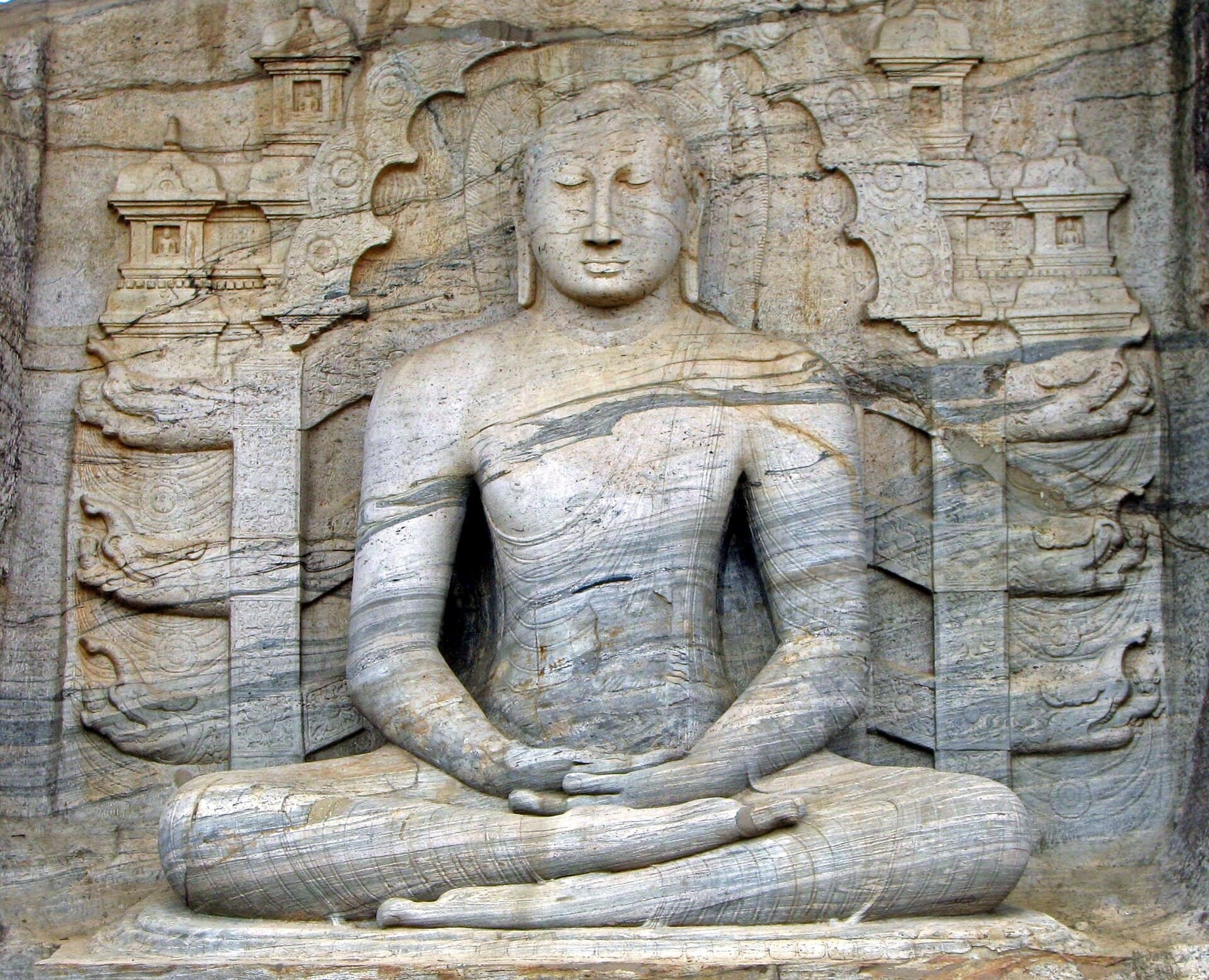
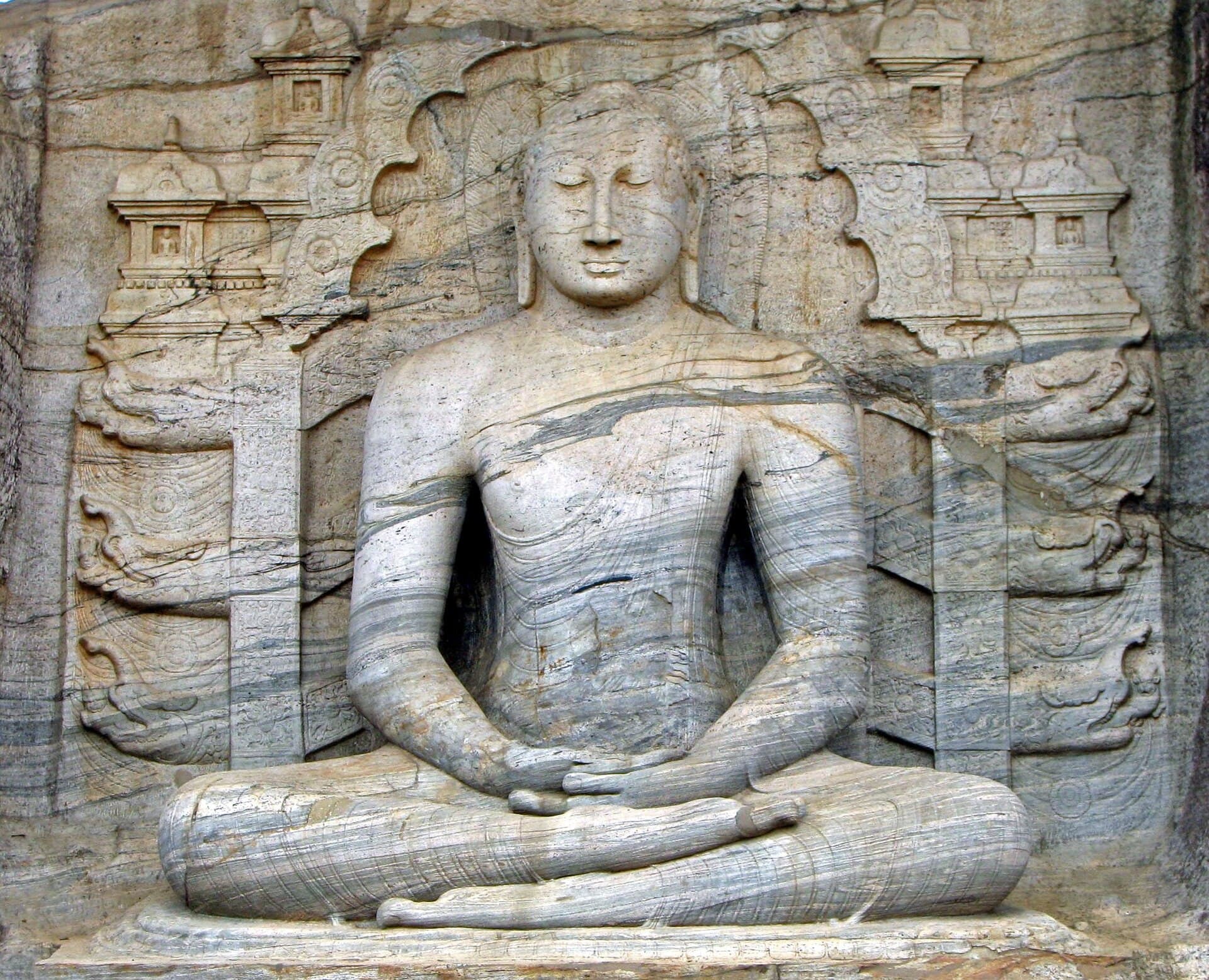
The Gal Vihara, originally known as the Uttararama (Northern Monastery), is the artistic masterpiece of the Polonnaruwa Kingdom and stands as one of the finest examples of ancient stone carving in the world. Commissioned by King Parakramabahu the Great in the 12th century, this sacred rock temple consists of four massive images of the Buddha, all flawlessly carved out of a single, continuous granite rock face. The early craftsmen utilized the natural dark bands and contours of the granite to add a sense of depth and movement to the sculptures. The four statues depict the Buddha in different postures, each representing a distinct spiritual state. The first is a large seated Buddha in deep meditation, positioned inside a carved rock alcove. The second is a smaller seated figure surrounded by images of deities. The third sculpture is a unique, 23-foot-tall standing Buddha with his arms crossed over his chest, depicting a state of supreme compassion and sorrow for the suffering of the world. The final and most spectacular image is a colossal, 46-foot-long reclining Buddha that depicts the Parinirvana (the final passing away into Nirvana). The attention to detail is extraordinary, visible in the soft expression on the face, the uniform folds of the thin robes, and the gentle indentation on the stone pillow under the Buddha's head. Visitors walk barefoot across a wide sand courtyard to view the sculptures, which are shaded by open structures, creating a deeply peaceful atmosphere.

View Experience Details
Royal Palace of King Parakramabahu
Culture & Temples

Royal Palace of King Parakramabahu

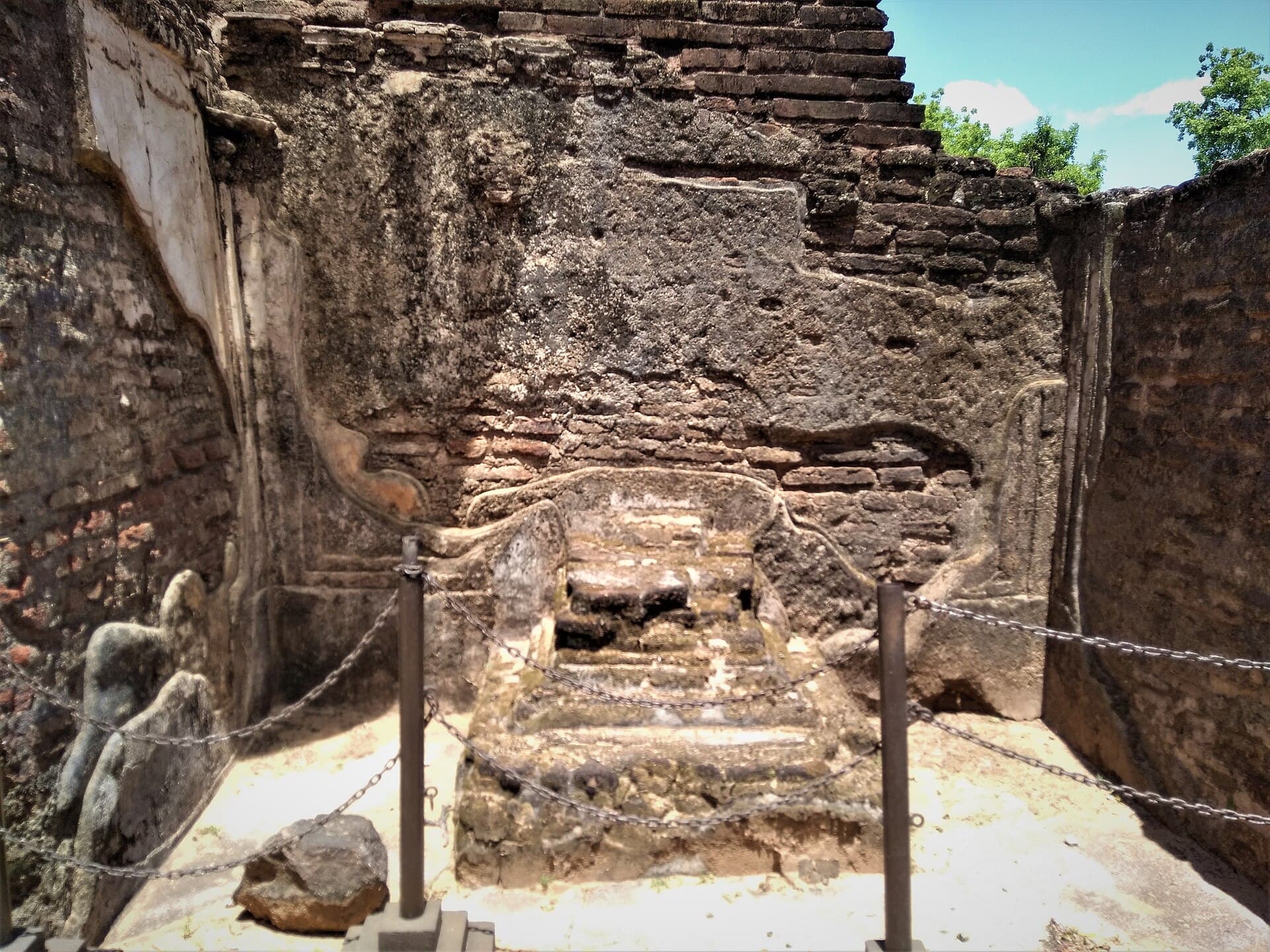
Located at the heart of the citadel, the Royal Palace of King Parakramabahu I (historically named Vevejanta Prasada, meaning the Palace of God Indra) is a grand monument to medieval royal luxury. Built in the 12th century, historical chronicles record that this massive structure was originally a 7-story palace featuring over a thousand rooms, supported by heavy wooden beams and topped with a gilded roof. Today, the crumbling ruins consist primarily of massive brick walls that stand nearly 30 feet tall and measure over 3 feet in thickness. The sheer scale and thickness of these walls reveal the advanced engineering required to support a multi-story building during the medieval era. Visitors can walk through the central hall to see the rows of deep sockets where heavy wooden floor beams once rested, and climb a small set of stone stairs that led to the upper floors. The palace complex also includes the beautifully preserved Council Chamber, featuring a stone staircase guarded by beautifully carved lions, and the Prince’s Bathing Pool (Kumara Pokuna), a sunken granite pool featuring stone gargoyles that channeled fresh water from the nearby river, offering an intimate look into royal life.

View Experience Details

Where to Stay

Handpicked luxury retreats, colonial estates & boutique lodges in Polonnaruwa

Ekho Lake House
5-Star Luxury
4.5 / 5

Ekho Lake House

A historic luxury lakeside bungalow originally built in 1870, once favored as a holiday retreat by Queen Elizabeth II.

Swimming PoolOn-site RestaurantAirport ShuttleComplimentary Breakfast
Google Maps
The Deer Park Hotel
5-Star Luxury
4.4 / 5

The Deer Park Hotel

A premium wilderness getaway composed of warmly decorated cottages built on the ancient hunting grounds of Sri Lankan royalty.

Swimming PoolAyurvedic Spa & WellnessFine DiningComplimentary Parking+3 more
Google Maps
Hotel Sudu Araliya
3-Star Luxury
3.9 / 5

Hotel Sudu Araliya

A highly popular, full-service resort offering traditional Sri Lankan hospitality directly along the water's edge.

Swimming PoolAyurvedic Spa & WellnessOn-site RestaurantComplimentary Parking+3 more
Google Maps
Greenfield Haven
4-Star Luxury
4.9 / 5

Greenfield Haven

A top-rated, serene boutique hotel nestled directly among lush green rice fields just outside the town center.

Ayurvedic Spa & WellnessComplimentary ParkingComplimentary Breakfast
Google Maps
Seyara Holiday Resort
2-Star Luxury
4.2 / 5

Seyara Holiday Resort

An exceptionally budget-friendly resort celebrated for its great location near core attractions and warm family-style service.

Swimming PoolOn-site RestaurantComplimentary ParkingAir Conditioning+2 more
Google Maps

Curated Journeys

Tour packages including Polonnaruwa

Ready to Explore Polonnaruwa?

Let our local destination specialists craft an authentic, tailor-made itinerary for you.

Plan a Trip to Polonnaruwa